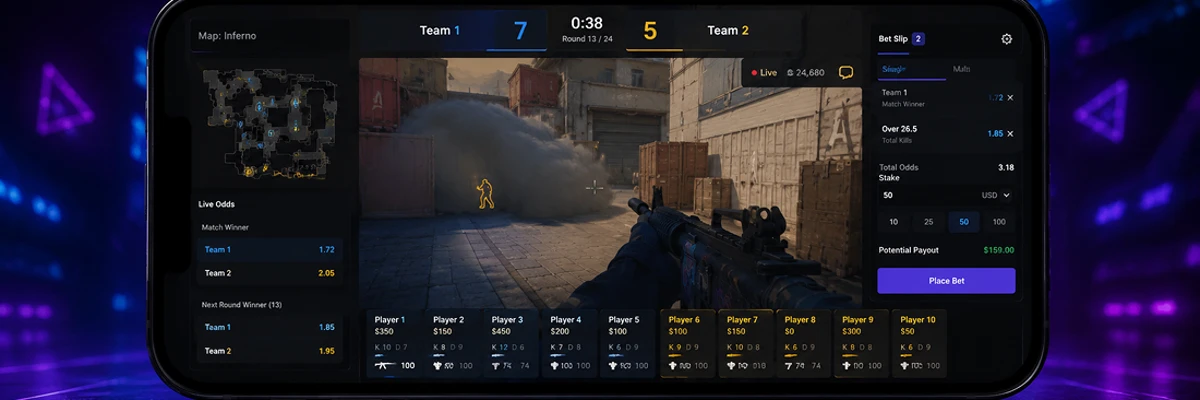
For many online casino operators, launching a sportsbook looks like a logical next step. Sports betting is a major part of the wider gambling market, mobile-first wagering continues to shape player behavior, and online gambling now represents a growing share of total European gambling revenue, according to EGBA market data.
But the decision is rarely simple. A sportsbook is not just another product tab next to slots, live casino, or table games. It introduces a different operational rhythm, a different risk model, and a different type of customer relationship. For casino-first operators, the question is not only whether sports betting can generate revenue. The bigger issue is whether the business is prepared to manage it properly.
Sportsbook is not a simple add-on
The first barrier is operational complexity. Online casino products are usually built around game aggregation, payment flows, bonus mechanics, player retention, and regulatory compliance. Sports betting adds several extra layers: odds feeds, event coverage, bet settlement, live markets, trading decisions, risk monitoring, and result verification.
Live betting makes this even more demanding. Odds can move within seconds, markets may need to be suspended instantly, and delays in data feeds can create financial exposure. This explains why sportsbook infrastructure often depends on specialist data and risk tools. For example, Sportradar’s betting data solutions show how central real-time data, live coverage, and trading support have become to modern sportsbook operations.
For a casino operator, this means sportsbook is not only a front-end feature. It is a full operational system that must work reliably across product, compliance, payments, CRM, and customer support.
The casino audience may not behave like bettors
Another common assumption is that casino players will naturally become sports bettors. In reality, the overlap can be limited or uneven. Slot players may be driven by entertainment, volatility, themes, bonuses, and short session cycles. Sports bettors often think differently. They follow teams, leagues, odds movement, statistics, fixtures, and live events.
This changes both marketing and retention. A sportsbook cannot simply be placed inside a casino lobby and expected to convert the whole database. Operators need to identify which segments are likely to engage with betting, which sports or events are relevant to them, and whether cross-sell campaigns produce long-term value or only short-term bonus-driven activity.
This is where analytics becomes important. Casino operators need to understand player intent, not just player volume. A large casino database does not automatically guarantee sportsbook liquidity or betting engagement.
Margin volatility creates a different risk profile
Casino products are usually easier to model over time because game mathematics are based on return-to-player structures and certified game performance. The UK Gambling Commission, for instance, provides guidance around return-to-player monitoring, reflecting how casino game performance is measured and controlled.
Sports betting margins behave differently. They depend on event outcomes, bettor behavior, pricing accuracy, market exposure, promotional costs, and risk management. A weekend of unfavorable football results can affect performance more visibly than a normal casino session pattern.
This does not make sportsbook too risky by default. It simply means the operator must be comfortable with a more dynamic margin environment. Strong trading systems, clear limits, and diversified event coverage can reduce the pressure, but they do not remove the fundamental volatility of sports betting.
Integration can become a hidden cost
Technical integration is another reason some operators hesitate. A sportsbook has to connect with the existing platform, wallet, KYC tools, responsible gambling controls, CRM, reporting systems, and bonus engine. If this is done poorly, the result can be a fragmented product that frustrates users and creates extra work for internal teams.
The challenge is even greater in regulated markets, where local rules may affect bet types, advertising, player protection, affordability checks, reporting, and market access. Broader sports industry trends also show that operators and investors increasingly need scalable systems and stronger commercial structures, as highlighted in Deloitte’s sports industry outlook.
What this means for operators
The hesitation around sportsbook is not always a sign of weakness. In many cases, it is a sign that operators understand the difference between product expansion and strategic expansion.
A sportsbook can strengthen an online casino brand, increase engagement around major events, and open new cross-sell opportunities. But it should not be treated as a quick revenue layer. It requires product expertise, data discipline, risk control, technical planning, and a clear understanding of the target audience.
For casino operators, the real question is not “Should we add sports betting?” It is “Can we operate sportsbook as a serious vertical rather than a secondary feature?” That distinction may decide whether sportsbook becomes a growth channel or a costly distraction.

Focused on sportsbook and esports, exploring market trends, emerging opportunities, and the growth of digital betting platforms. Looks at how user experience and platform design shape player engagement over time.
More articles in Esports & Sports betting