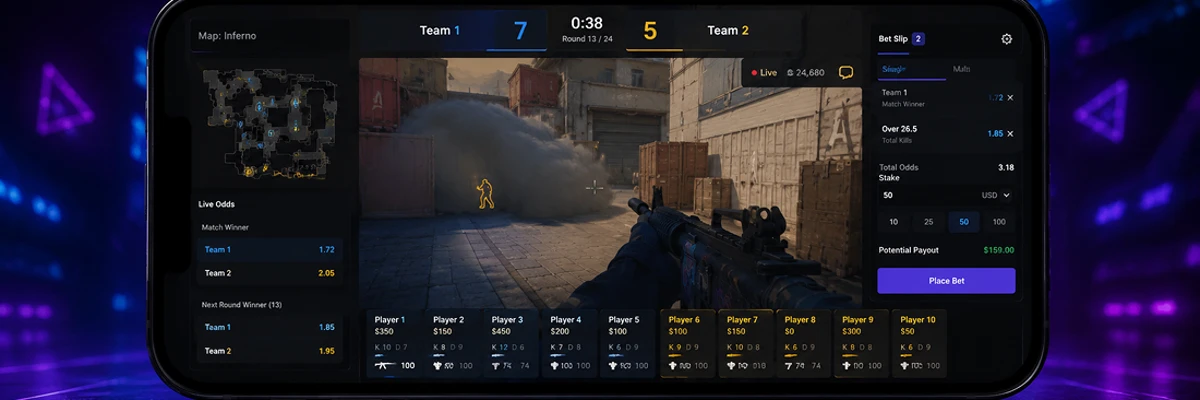
Sports betting can look complicated at first glance — numbers, odds formats, spreads, totals — but at its core, it follows a simple principle: you predict an outcome and risk money in exchange for a potential payout. This beginner-friendly guide explains what sports betting is, how it works, and what every newcomer should understand before placing a first bet.
What Is Sports Betting?
Sports betting is the act of placing money on the outcome of a sporting event. This could be a football match, a basketball game, tennis, MMA, or virtually any competitive sport.
In simple terms:
You choose an outcome (for example, Team A to win).
You place a stake (for example, $10).
If your prediction is correct, you receive a payout based on the odds.
A sportsbook (also called a bookmaker) is the company that offers the betting platform and sets the odds. A general overview of how sports betting works can be found on Wikipedia.
Understanding Odds (The Most Important Concept)
Odds determine how much you can win and reflect the implied probability of an event happening.
There are three main formats:
Decimal (popular in Europe and Canada)
Fractional (common in the UK)
American (used in the United States)
For beginners, decimal odds are easiest to understand.
Example (Decimal Odds)
If a team has odds of 2.00 and you bet $10:
10 × 2.00 = $20 total return
(Your $10 stake + $10 profit)
If the odds are 1.50:
10 × 1.50 = $15 total return
If the odds are 3.00:
10 × 3.00 = $30 total return
The key idea is simple: odds reflect both the likelihood of an event and the size of the potential return.
The higher the odds, the lower the implied probability — and the higher the potential payout.
Basic Types of Bets Explained
You don’t need to understand every betting market at the start. Focus on the core types:
1️⃣ Moneyline (Match Winner)
You simply pick which team will win.
Example:
Team A vs Team B
You bet on Team A to win.
2️⃣ Over / Under (Totals)
You bet on whether the total points or goals will be over or under a specific number.
Example:
Total goals line: 2.5
You bet Over 2.5 → you win if 3 or more goals are scored.
3️⃣ Spread / Handicap
Used to balance uneven teams.
Example:
Team A -5.5
They must win by 6 or more points for your bet to win.
4️⃣ Accumulator (Parlay)
Multiple bets combined into one. All selections must win for a payout. Higher risk, higher reward.
For beginners, moneyline and totals are usually the simplest starting points.
How to Place a Bet (Step-by-Step)
The process is straightforward:
Choose a sport and match.
Select a betting market (e.g., winner, total goals).
Enter your stake.
Review potential payout.
Confirm the bet.
Important: Odds can change quickly, especially in live betting. Always double-check before confirming.
How Do Bookmakers Make Money?
Sportsbooks do not rely on guessing outcomes. They build a margin into the odds — sometimes called the “vig” or “house edge.”
This means the combined implied probabilities of all outcomes usually exceed 100%. That small margin ensures the bookmaker profits over time.
Regulated markets help ensure fairness and transparency. For example, the UK Gambling Commission oversees licensed operators in the UK, ensuring compliance and player protection.
Basic Risk Management for Beginners
Sports betting should be treated as entertainment, not guaranteed income.
Beginner principles:
Never bet money you cannot afford to lose.
Avoid chasing losses.
Start with small stakes.
Understand probability before increasing risk.
Responsible gambling organizations such as the National Council on Problem Gambling provide educational resources about safe betting practices.
Final Thoughts
Sports betting becomes much less intimidating once you understand how odds work and how payouts are calculated. Start with simple bets, learn how probability affects value, and focus on discipline rather than emotion.
From zero to bet, the key is understanding the system before risking real money. Knowledge reduces mistakes — and in sports betting, informed decisions matter far more than lucky guesses.

Focused on sportsbook and esports, exploring market trends, emerging opportunities, and the growth of digital betting platforms. Looks at how user experience and platform design shape player engagement over time.
More articles in Esports & Sports betting