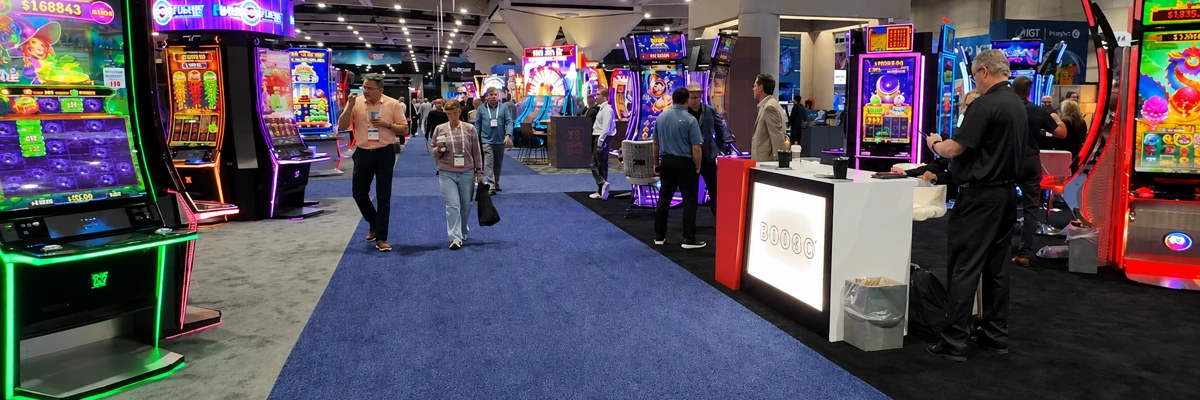
Live dealer casinos have always relied on one key promise: creating an experience that feels as close as possible to a real casino floor. For years, achieving that goal required purpose-built studios, dedicated gaming tables, extensive camera setups and enough physical space to accommodate every branded environment an operator wanted to offer.
That model is gradually changing. Advances in cloud production, virtual rendering and ultra-low-latency streaming now allow providers to separate the physical studio from the visual experience presented to players. Instead of constructing multiple branded rooms, operators can produce a single live feed while generating several unique casino environments in real time.
This shift is more than a technical upgrade. It represents a different approach to scalability, operational efficiency and player engagement. As competition among live casino providers intensifies, virtual production has become an increasingly important tool for delivering distinctive experiences without continuously expanding studio infrastructure.
Why Traditional Live Casino Studios Face New Challenges
The popularity of live dealer games has grown steadily over the past decade. Blackjack, roulette, baccarat and game-show formats now represent one of the fastest-growing segments of online gambling, largely because they combine digital convenience with real human interaction.
However, this growth has created new production challenges.
Many providers now serve dozens—or even hundreds—of casino brands simultaneously. Each operator wants its own visual identity, customised branding, promotional campaigns and VIP experiences. Under the traditional production model, every variation often required additional studio space, redesigned sets or dedicated production workflows.
This approach quickly becomes expensive. Physical studios require lighting systems, cameras, technical crews and ongoing maintenance. Expanding into new regulated markets may also involve creating country-specific environments or adapting the visual presentation to different audiences.
According to the PwC Global Entertainment & Media Outlook, competition across streaming and digital entertainment increasingly centres on personalised experiences, scalable technology and operational efficiency.
From Physical Studios to Virtual Production
Virtual casino studios change the production model without changing the game itself.
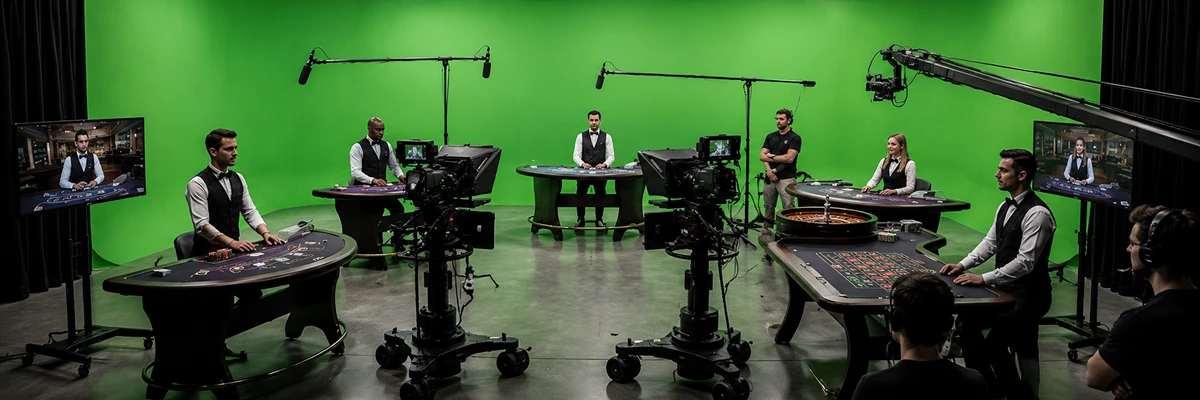
Instead of building multiple physical rooms, providers capture dealers inside a simplified production environment. The visual elements that players see—including backgrounds, branding, promotional graphics and decorative environments—are generated digitally during the production workflow.
In practical terms, a blackjack dealer may operate from a single table while appearing inside several completely different casino environments depending on which operator the player is using.
For example, one operator may present an elegant Monte Carlo-inspired room, while another chooses a contemporary Scandinavian design or a luxury VIP lounge. The dealer, gameplay and camera angles remain identical, but each casino receives its own distinctive presentation.
This flexibility has become possible because modern cloud infrastructure can process live video with remarkably low delay while simultaneously generating multiple output streams.
The development mirrors broader trends across professional broadcasting, where cloud-based media workflows have become increasingly common for sports, entertainment and live event production.
Cloud Rendering Makes Multi-Brand Operations Easier
One of the biggest advantages of cloud production is scalability.
Traditional live casino expansion usually requires proportional investment. Supporting twice as many branded tables often means building larger studios, purchasing additional equipment and hiring more production staff.
Cloud rendering changes this relationship.
Instead of duplicating production resources, providers can create multiple branded outputs from a single video source. Rendering and visual composition occur inside cloud infrastructure rather than inside the physical studio.
This provides several operational advantages:
faster onboarding for new operator partners;
simplified localisation for different markets;
reduced hardware requirements inside production facilities;
easier implementation of seasonal campaigns and promotional events;
greater flexibility when testing new visual concepts.
The approach also reduces downtime. Because backgrounds and branding exist as digital assets rather than physical scenery, updates can often be deployed without interrupting ongoing live production.
Traditional Studio Production | Virtual Casino Studio Production |
|---|---|
Separate physical environments | One studio supports multiple environments |
Studio expansion required for new brands | Digital environments created in the cloud |
Hardware-heavy production | Greater reliance on cloud infrastructure |
Higher operational costs | More scalable operating model |
Slower visual updates | Rapid branding and campaign changes |
For operators entering regulated markets, this flexibility can significantly reduce launch timelines. Instead of preparing entirely new production spaces, providers can adapt existing infrastructure while tailoring the visual presentation to local audiences.
The Technology Behind Virtual Casino Studios
Virtual production combines several mature technologies rather than relying on a single breakthrough.
Among the most important components are:
cloud-based video processing;
real-time chroma key compositing;
graphics rendering engines;
adaptive streaming;
ultra-low-latency delivery;
distributed cloud infrastructure.
Chroma key itself has existed for decades in television and film production. The innovation lies not in removing a green background, but in moving that entire process into cloud-based production pipelines.
Instead of compositing video locally inside the studio, modern platforms can perform rendering remotely while maintaining synchronisation between dealer actions and player interaction.
This becomes increasingly important as streaming technology evolves. Organisations such as the Streaming Video Technology Alliance continue to develop best practices for scalable cloud video delivery, helping industries—including iGaming—manage growing demand for high-quality live streaming.
Why Ultra-Low Latency Remains Essential
Virtual studios only work if the live experience still feels immediate. In live dealer games, latency is not a minor technical issue. It directly affects gameplay. A roulette spin, a blackjack decision or a betting window must remain synchronised between the dealer, the platform and the player.
If the video stream arrives too late, the player experience loses credibility. The game no longer feels shared or live. This is why virtual production cannot be treated separately from streaming infrastructure. Background rendering, branding layers and video delivery all need to operate inside one low-latency workflow.
Technologies such as WebRTC for real-time communication have helped set expectations for interactive video, while newer transport models are pushing the industry toward even lower delay and more reliable live delivery. For live casino providers, this matters because visual innovation should never interfere with game timing.
Business Benefits for Operators and Providers
Virtual casino studios create value on both sides of the industry. Providers can serve more brands from the same production base, while operators gain a more distinctive player-facing product.
For providers, the biggest benefit is efficiency. A single studio can support several branded environments without rebuilding sets. This makes it easier to sell customised live dealer tables to more operators, including smaller brands that may not be able to fund dedicated physical studios.
For operators, the benefit is differentiation. Many live casino lobbies offer similar games from the same major suppliers. A branded studio environment helps an operator make the experience feel more exclusive, even if the underlying game format is familiar.
The commercial logic is similar to broader cloud adoption in digital media. Cloud platforms allow companies to scale production and delivery without owning every layer of physical infrastructure. This is why AWS Media Services and similar cloud ecosystems have become increasingly relevant across streaming, broadcasting and interactive entertainment.
What Virtual Studios Can Change in Live Casino Design
The move toward virtual studios could reshape how live dealer games are designed. Instead of treating the studio as a fixed location, providers can treat it as a flexible interface.
This opens the door to more contextual experiences. A room could change for a tournament final, a seasonal campaign, a VIP segment or a regional audience. A Canadian-facing roulette table could look different from a European one, even if the same dealer feed is used. A loyalty campaign could be supported by visual changes in the background rather than only by banners in the casino lobby.
The most important opportunities include:
faster launch of branded live tables;
more localised visual environments;
VIP rooms with stronger identity;
seasonal and event-based studio designs;
reduced dependence on physical studio expansion;
more efficient testing of new live casino concepts.
This does not mean physical studios will disappear. Dealers, tables, cameras, lighting and compliance controls remain necessary. What changes is the amount of branding and scenery that needs to exist physically inside the room.
The Role of Cloud-Native Infrastructure
Virtual casino studios depend on stable cloud-native systems. Rendering, compositing, stream routing, monitoring and analytics must all work reliably at scale. If one branded output fails, the provider needs to isolate the issue without disrupting every operator using the same source feed.
That is why cloud-native architecture matters. Tools and standards promoted by the Cloud Native Computing Foundation are widely used across modern digital services because they help companies build scalable, resilient and observable systems.
For live casino streaming, this is especially important. Providers may need to support thousands of concurrent players across different regions, each receiving low-latency video. The system must also handle peak traffic during tournaments, weekend sessions or major promotional events.
In this environment, virtual production is not only a visual upgrade. It becomes part of the platform architecture.
Player Experience Still Comes First
The risk with any new production technology is that it becomes too visible. If the background looks artificial, if the dealer edges are poorly cut out or if the stream feels delayed, players will notice. A virtual studio must therefore support immersion without distracting from the game.
Good implementation depends on several details: clean lighting, accurate chroma key processing, stable frame rates, sharp dealer separation and consistent colour grading. These are production details, but they affect trust. A live casino game must look polished enough to feel fair, professional and reliable.
Streaming quality also influences engagement. Industry tools such as Dolby OptiView highlight how video experience, monitoring and delivery performance can affect digital engagement. For live casinos, that connection is even stronger because the video stream is not just content. It is the game interface itself.
Advertising, Data and Personalisation
Virtual casino studios also raise questions about how far personalisation should go. If a platform can generate different environments for different segments, it may also be tempted to personalise too aggressively.
For example, a VIP player might see a premium lounge environment, while another player sees a tournament-themed room. This can be effective, but operators must remain careful with targeting, advertising rules and responsible gambling principles.
The IAB Tech Lab provides useful standards and frameworks around digital advertising and data-driven media. Although live casino is a specialised sector, the broader lesson still applies: personalisation should be transparent, controlled and respectful of user data.
For CasinoAudit’s perspective, this is an important point. The future of live casino studios should not only be judged by visual quality. It should also be judged by fairness, transparency, data protection and responsible design.
What Comes Next for Virtual Casino Studios
The next phase of virtual casino production will likely combine cloud rendering, AI-assisted graphics, real-time localisation and more advanced streaming infrastructure. Providers may use AI tools to generate branded visual concepts faster, adapt studio designs for different markets or automate some production tasks.
However, the core challenge will remain the same: making the technology invisible to the player. A successful virtual casino studio should not feel like a technical experiment. It should feel like a polished, reliable and natural live dealer environment.
As competition increases, operators will need more than large game libraries. They will need stronger presentation, more distinctive live rooms and better integration between brand identity and gameplay.
Conclusion
Virtual casino studios mark a major shift in live dealer production. They allow operators and providers to move beyond the limits of physical studio space while creating more flexible, branded and scalable live experiences.
The technology is not entirely new. Chroma key, cloud streaming and virtual rendering have existed in other media sectors for years. What is changing now is their role inside iGaming. They are becoming commercial tools, not just production effects.
For live dealer games, the opportunity is clear: one physical setup can support many visual identities, many markets and many operator brands. But the success of this model depends on execution. Low latency, video quality, responsible personalisation and platform stability will determine whether virtual studios become a lasting standard or simply another visual trend.
For the industry, the direction is already visible. The future of live casino will not be defined only by bigger studios. It will be defined by smarter production workflows, cloud-based scalability and live experiences that feel both customised and trustworthy.

Kendal explores live casino, table games, and mobile platforms, analyzing how digital products recreate real casino experiences and influence player behavior.
More articles in Live Casino & Table Games